
Find California Marriage Records
California marriage records include both public and confidential marriage licenses kept by county clerks across the state. The California Department of Public Health maintains certificates for select years while each county clerk-recorder office holds the original documents for marriages performed in their jurisdiction. You can search for marriage records online, request copies by mail, or visit county offices in person. Public marriage records are open to anyone while confidential marriage certificates are available only to the married parties or by court order.
California Marriage Records Quick Facts
Where to Get Marriage Records in California
Two main sources hold marriage records in California. County clerk-recorder offices issue marriage licenses and maintain original certificates for all marriages performed in their county. Each of the 58 counties in California keeps its own records. The county clerk handles confidential marriages while the county recorder manages public marriage certificates. Both offices work together in most counties. Some counties combine these roles into a single clerk-recorder department.
The California Department of Public Health Vital Records division keeps marriage records for limited years. The state has public marriage records from 1905 to 2001 and from 2010 to the present. CDPH does not maintain confidential marriage records at all. For years outside their range or for confidential marriages, you must contact the county where the license was issued. State processing times average 5 to 7 weeks compared to same-day or next-day service at most counties.
County offices offer faster service than the state. Most counties provide same-day copies if you visit in person. Many counties now offer online ordering through VitalChek or their own systems. Fees vary by county but typically match the state fee of $19 per certified copy as of January 2026. This fee increased by $2 under Assembly Bill 64 which took effect at the start of 2026.
You do not need to be a California resident to get married in the state. Any county can issue your license. The license is valid for 90 days from the date of issuance. You can use it anywhere in California. There is no waiting period. You can marry the same day you get your license.
Public and Confidential Marriage Licenses
California offers two types of marriage licenses. Public marriage licenses are the standard option used by most couples. These become part of the public record once registered with the county recorder. Anyone can request a certified copy of a public marriage certificate. At least one witness must sign the license at the ceremony. A second witness signature is optional. The county recorder serves as the local registrar for public marriages under California law.
Confidential marriage licenses have been available in California since 1971 under California Family Code sections 500 through 511. Both parties must be at least 18 years old. Minors cannot use confidential licenses. The couple must be living together as spouses at the time they apply. No witnesses are required at the ceremony for confidential marriages. These records are not open to public inspection. Only the married parties can obtain copies unless a court orders otherwise. The county clerk maintains confidential marriage certificates as permanent records.
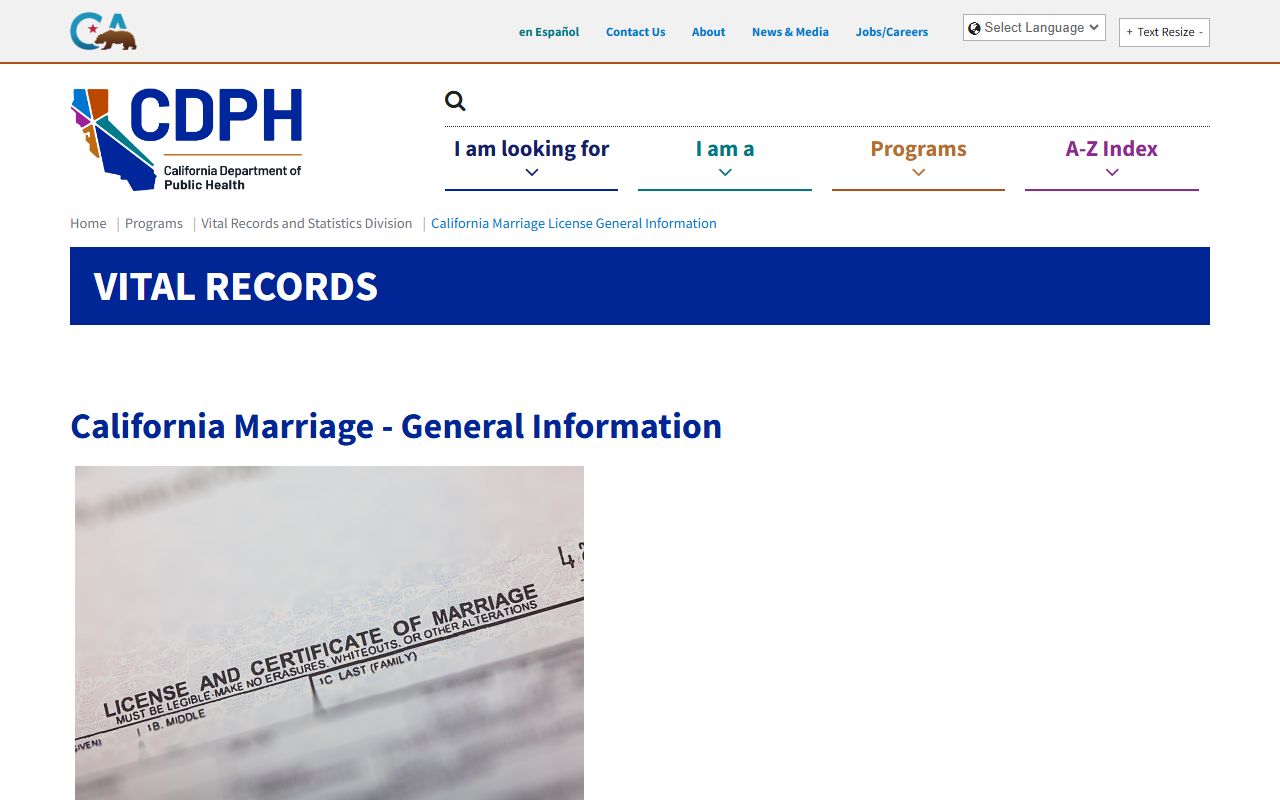
The choice between public and confidential marriage affects who can access your record later. Public records are searchable by anyone. Employers, family members, or anyone else can request copies. Confidential records stay private. Only you and your spouse can get copies. This privacy protection lasts forever under California law.
How to Apply for a Marriage License
Both parties must appear together in person at a county clerk office. You cannot apply by mail or online for the license itself. Some counties let you start an application online but you still must finish in person. Bring valid photo identification such as a driver license, passport, state ID card, or military ID. Your ID must show your photo, date of birth, and issue and expiration dates. Some counties also ask for your birth certificate though this is not required statewide in California.
If you were married before, you need to know when and how that marriage ended. Be ready to provide the exact date your previous marriage ended and whether it ended by death, divorce, dissolution, or annulment. Some counties require a copy of the final divorce decree or death certificate. Check with your chosen county before you visit. No blood test is required in California. This requirement was eliminated years ago.
Marriage license fees vary by county in California. Most counties charge between $60 and $122 for a public marriage license. Confidential licenses typically cost $10 to $15 more than public licenses in the same county. Some counties offer a discount if you complete premarital counseling. The CDPH county directory lists contact information for all 58 county clerk offices where you can confirm current fees and hours.
After the Marriage Ceremony
The person who performs your marriage ceremony must return the completed license to the county clerk or county recorder within 10 days. This is required under California Family Code section 359. The officiant fills in ceremony details and obtains required signatures. For public marriages, at least one witness must sign. You do not automatically receive a copy of your marriage certificate after the ceremony. You must request and pay for certified copies separately.
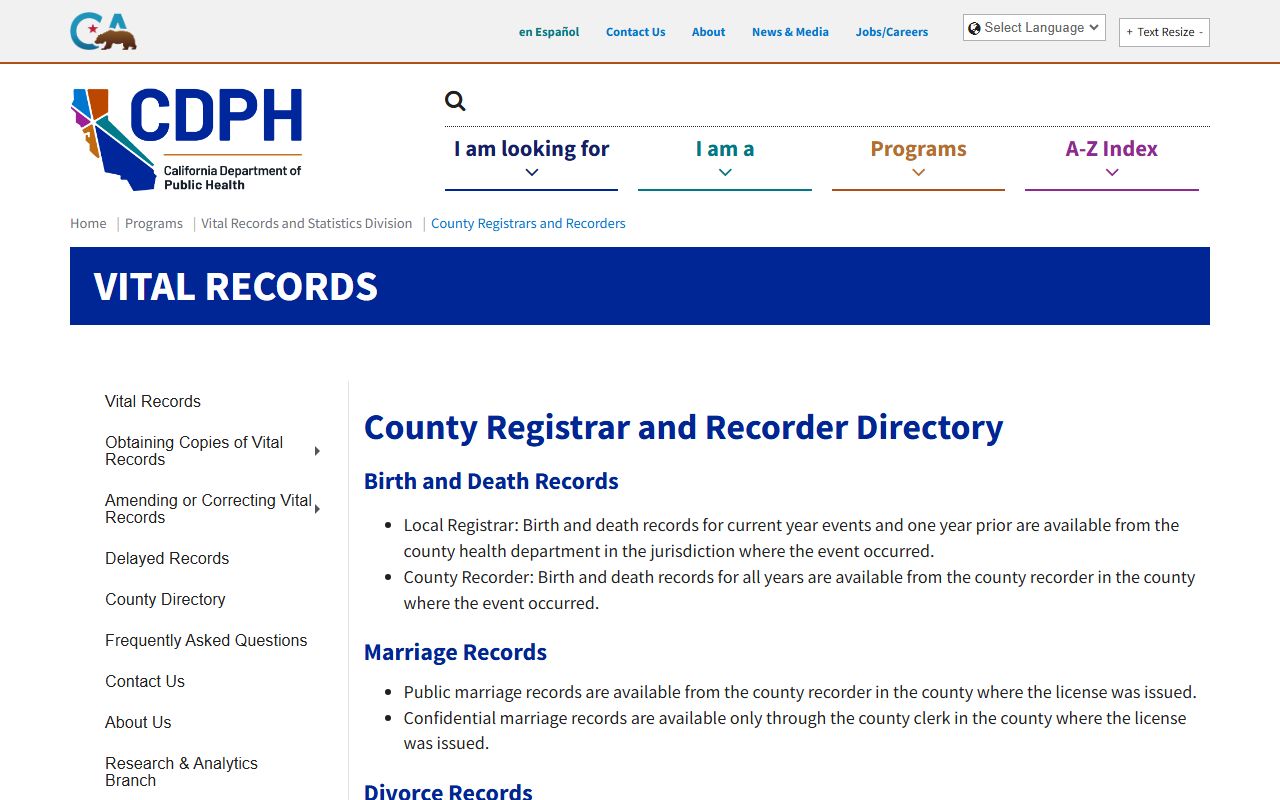
Do not make any changes to your marriage license after it is issued. Do not cross out information or use correction fluid. All information must be legible and reproducible. Any alterations void the license. You would need to pay for and obtain a new license if this happens. Write carefully when you fill in your information at the county clerk office in California.
Once the county registers your marriage, you can request certified copies. These copies serve as legal proof of your marriage. You need certified copies to change your name on a driver license, Social Security card, passport, or bank accounts. Under California Family Code section 306.5, either spouse can change their middle or last name through marriage without a separate court petition. The marriage certificate showing your new name is sufficient legal proof of the name change in California.
Getting Certified Copies of Marriage Certificates
For public marriage records, contact the county recorder in the county where the marriage license was issued. Most counties offer in-person service, mail requests, and online ordering. In-person requests often result in same-day service. Mail requests typically take one to two weeks. Online orders through VitalChek or county portals may arrive within a few days depending on shipping options you choose. Fees are $19 per certified copy as of January 2026 in most counties due to Assembly Bill 64.
The state CDPH fee schedule shows all current charges for vital records including marriage certificates. The certificate fee increased by $2 on January 1, 2026. If the state cannot locate your record, they will issue a Certificate of No Public Record and keep your fee as a search fee. This is authorized by state law. Do not send cash through the mail. Make checks or money orders payable to CDPH Vital Records if ordering from the state. Payment must be drawn on a United States bank.
For confidential marriage records, only the married parties can request copies. You must contact the county clerk in the county where your license was issued. Bring valid photo ID that matches the name on the record. Court orders are the only exception allowing others to obtain confidential marriage certificates. The privacy protections for confidential marriages are very strong in California.
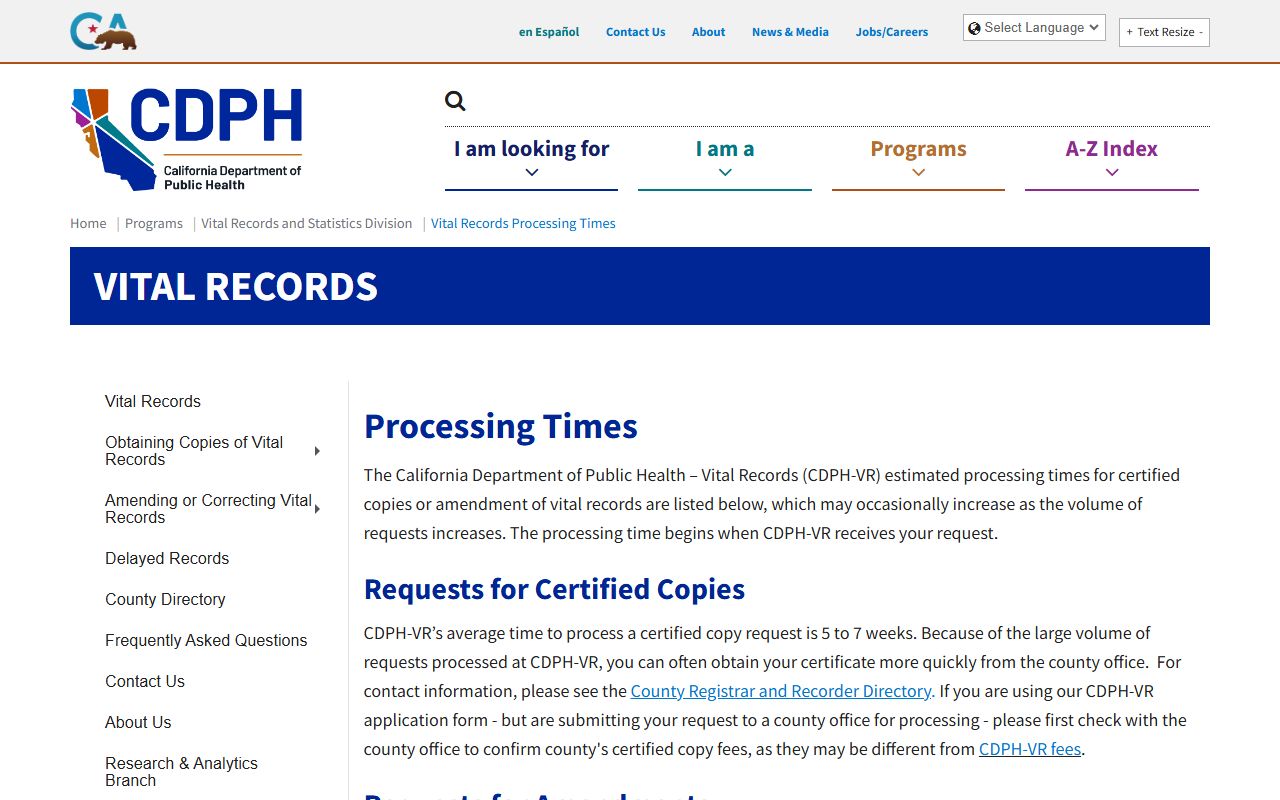
Processing times at the state level average 5 to 7 weeks according to the CDPH processing times page. County offices are almost always faster. The state recommends requesting records from counties when possible. Counties have more complete records and can process requests much quicker than the state office in Sacramento. For marriages that occurred between 1949 and 1986, expect processing times of six months or longer if you use the state. The county is a better choice for those years.
Marriage Record Forms in California
The state offers several forms for marriage record requests. Form VS 113-A is the application for a certified copy of a marriage record. This is the main form you use when requesting a certificate from CDPH. You can download it from the CDPH forms page which has all vital records forms in one place. Forms are available in both English and Spanish for most vital record types.
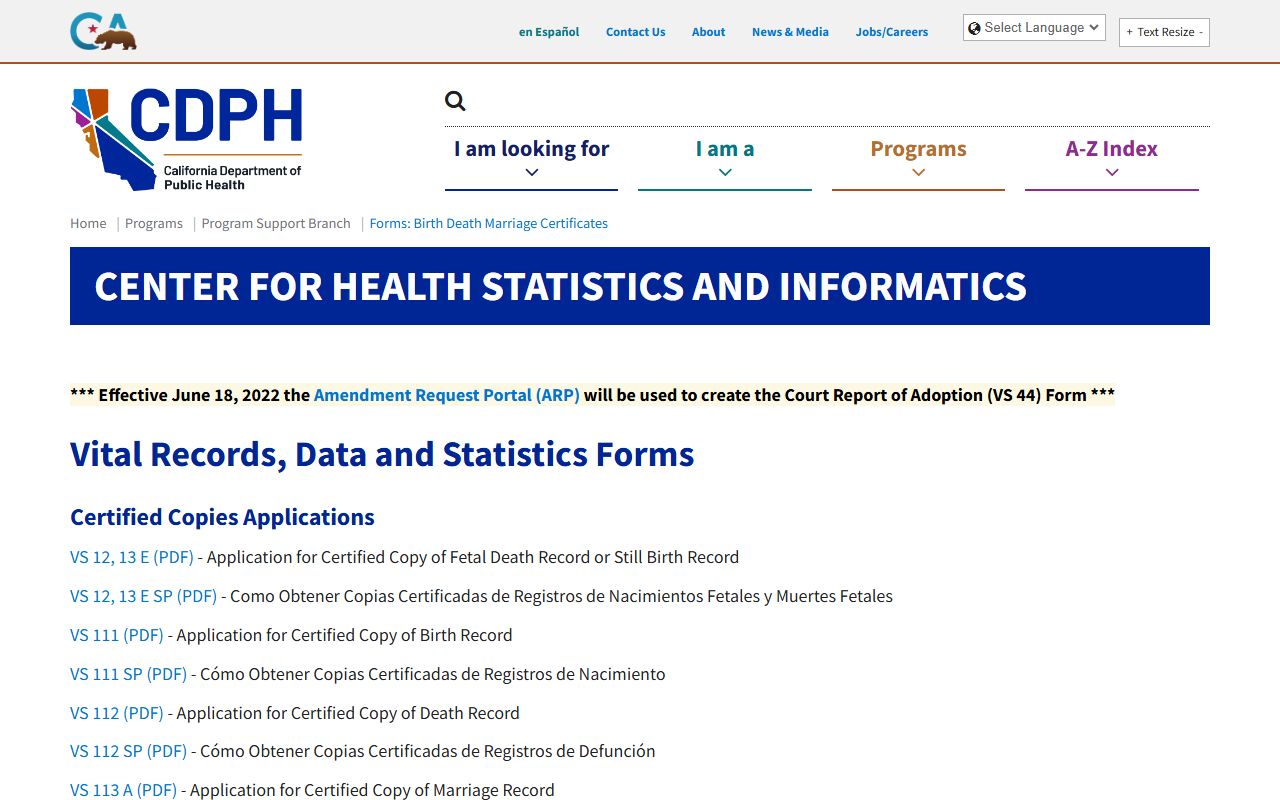
Form VS 24 C is used to amend a marriage record. If you need to correct information on your marriage certificate, use this form. Amendments within the first year of marriage are free but you still pay $19 per certified copy of the amended certificate. Amendments after one year cost $26 and include one certified copy of the amended record. Each additional copy costs $19. Spanish versions of amendment forms are also available as form VS 24 C SP for those who prefer Spanish language forms in California.
Authorized copies require a notarized sworn statement under California Health and Safety Code section 103526. This statute defines who can obtain certified copies that are valid for legal purposes. You must prove your relationship to a party on the record. Informational copies do not require notarization. Anyone can request an informational copy of a public marriage record. These copies are marked "INFORMATIONAL, NOT A VALID DOCUMENT TO ESTABLISH IDENTITY" and cannot be used for official purposes like name changes or passport applications in California.
California Marriage Laws and Requirements
California Family Code Part 1 governs marriage in the state. Section 300 defines marriage as a personal relationship arising from a civil contract between two persons. Consent alone does not create a marriage. You must obtain a license and have the marriage solemnized by an authorized person. The license becomes a certificate once it is registered after the ceremony.
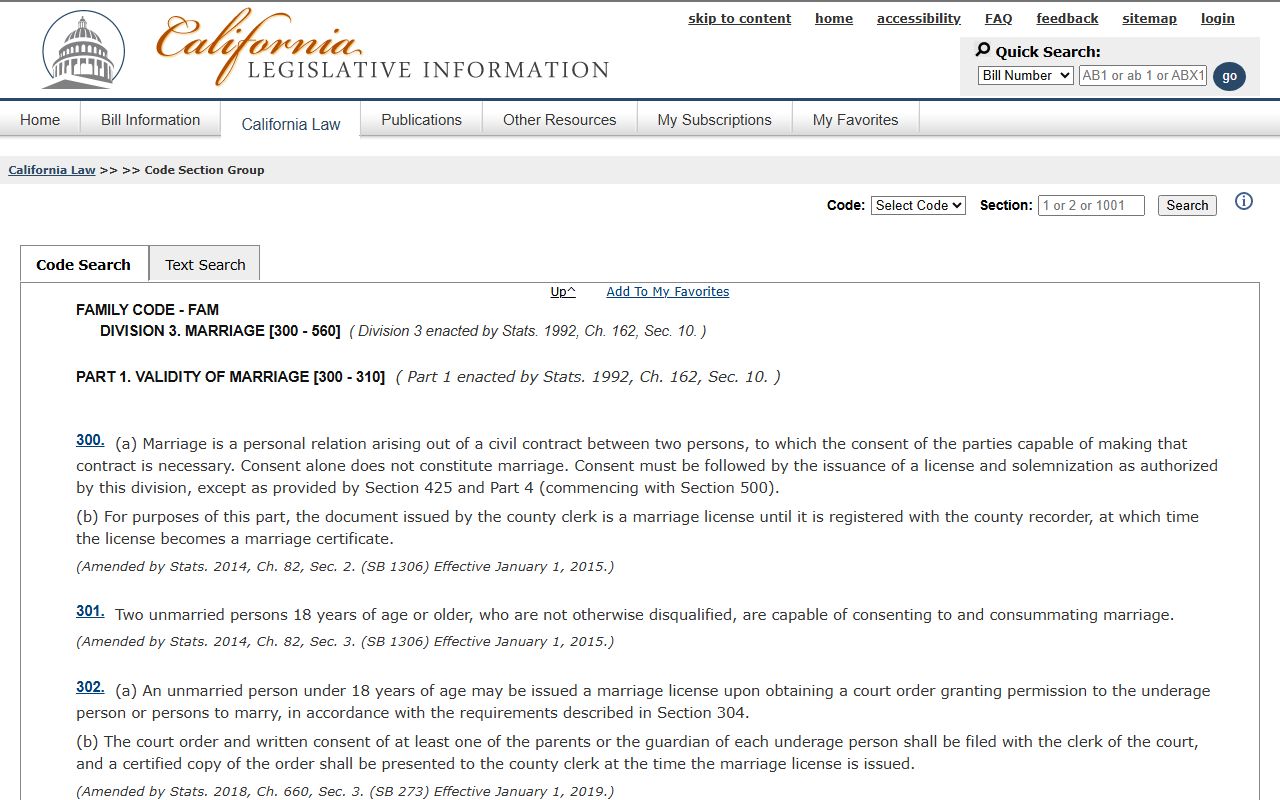
Age requirements appear in Family Code sections 301 and 302. Two unmarried persons who are 18 or older can consent to marriage. Persons under 18 may marry only with a court order granting permission and written consent from at least one parent or legal guardian. The court may require premarital counseling for minors. Most California marriages involve adults who do not need court approval or parental consent.
Who can perform marriages is covered in Family Code sections 400 through 402. Priests, ministers, and rabbis of any religious denomination may solemnize marriages. Judges, retired judges, and court commissioners can also perform ceremonies. Any person authorized by a religious denomination qualifies. County clerks serve as Commissioners of Civil Marriages and can appoint temporary deputy commissioners. These deputies can perform civil ceremonies at the courthouse. No one is required to perform any marriage they do not wish to perform under California law.
Marriage by proxy is not allowed in California except for one narrow exception. Active duty military members stationed overseas and serving in a conflict or war may marry through an attorney-in-fact under a power of attorney. This exception appears in Family Code section 420(b). Otherwise both parties must be physically present together in the same location with the officiant for the marriage to be valid in California.
Browse Marriage Records by County
Each California county has a clerk-recorder office that handles marriage licenses and certificates. Select a county to find contact details and local information for marriage records in that area.
Marriage Records in Major Cities
Cities in California do not issue marriage licenses. Residents go to their county clerk office to apply. Pick a city to learn which county handles marriage records for that area.